Weight Loss & Bariatric Surgery

Summary

Weight-loss surgery, also known as bariatric surgery, refers to procedures designed to help individuals with obesity achieve significant weight loss and improve their health. Common types of bariatric surgery include gastric bypass and sleeve gastrectomy. Each of these procedures modifies the digestive system to either limit food intake or decrease nutrient absorption, helping patients manage their weight more effectively.

Why Choose Us?

Expert Care

Assoc. Prof. Apostolou strives to deliver unparalleled medical care and support.

Compassionate Follow Up

Experience unwavering encouragement from our dedicated team every step of the way.

Deciding which procedure is right for you can be challenging, and your surgeon will explain all of your options and offer a recommendation that is tailored to your needs, your weight, and your previous history.

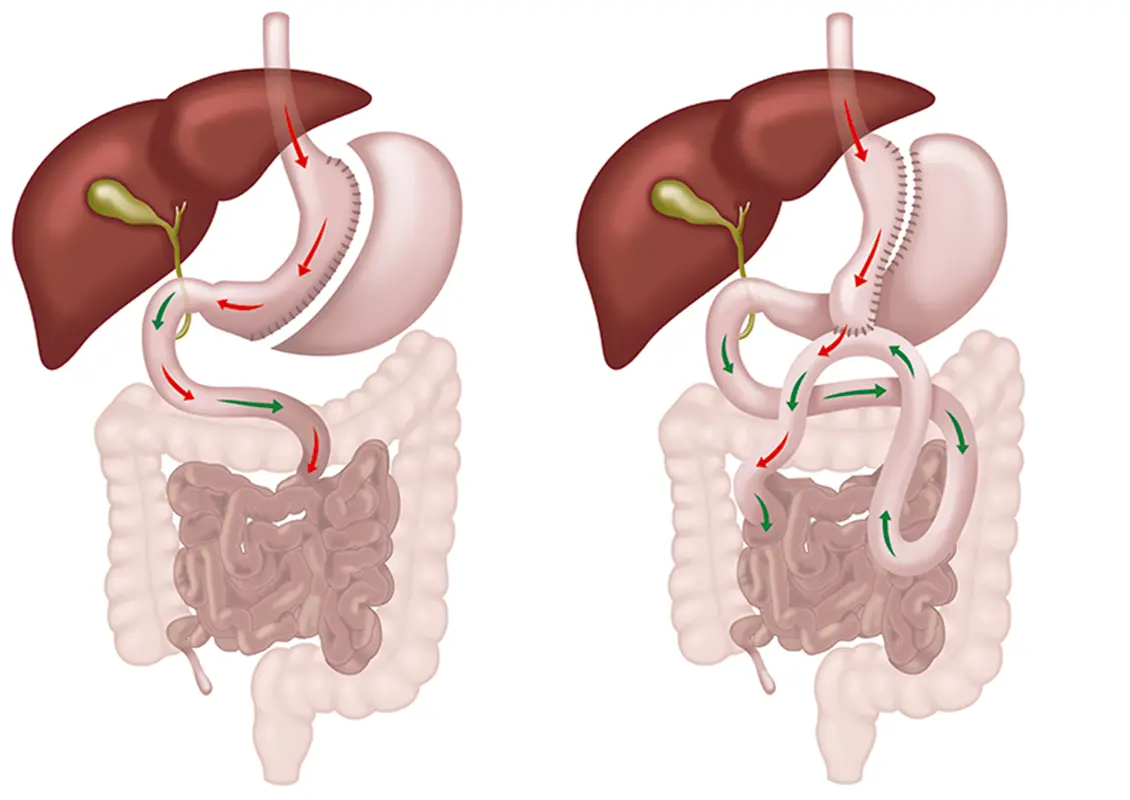
The most common procedures in Australia are the Laparoscopic Sleeve Gastrectomy, Laparoscopic Single Anastomosis Gastric Bypass, or Roux-en-Y Bypass. There are also other procedures available for patients with particular needs.

Bariatric surgery is a medical procedure aimed at helping individuals with severe obesity achieve significant weight loss and maintain it over time. Bariatric surgeries include gastric bypass and sleeve gastrectomy, which reduce stomach size, as well as biliopancreatic diversion.

• Metabolic and Bariatric Surgery (MBS) is recommended for individuals with BMI >35 kg/m², regardless of the presence or absence of comorbidities, and should be considered for individuals with metabolic disease and BMI 30–34.9 kg/m² who do not achieve substantial or durable weight loss or comorbidity improvement using non-surgical methods.

• BMI thresholds should be adjusted in the Asian population such that BMI >25 kg/m² suggests clinical obesity, and individuals with BMI >27.5 kg/m² should be offered MBS.

Obesity is a treatable disease that is a worldwide health concern associated with having an excess amount of body fat. It is caused by genetic and environmental factors and can be difficult to control through dieting alone. Obesity is diagnosed by a health care provider and is classified as having a body mass index (BMI) of 30 or greater.

Bariatric surgery is a safe and effective treatment option for those living with severe obesity and for some living with obesity combined with other obesity-related conditions. These procedures are recognised for the metabolic and hormonal changes that have a role in hunger (wanting to eat) and satiety (feeling full). They also play a role in the improvement and/or resolution of conditions that can occur as a result of obesity and severe obesity.

Bariatric surgery is a recognised and accepted approach for both weight loss and the treatment of many of the conditions related to obesity. However, not everyone qualifies for bariatric surgery. There are certain requirements people must meet in order to be a candidate for bariatric surgery.

Obesity is a complex health disease. There is no denying that Australia is facing an obesity epidemic, but the factors that contribute to weight gain are many and varied.

Long work hours, increased access to fast foods, and sedentary lifestyles all contribute, as do genetic factors.

The challenge of losing weight can be very difficult for many people. Northern Bariatrics knows that many patients try their best with making dietary, exercise and lifestyle changes, only to find they can’t achieve the desired results.
Bariatric (weight loss) surgery is a proven and effective treatment pathway for many patients to lose weight and overcome obesity-related health complications.

Your Journey with Us

During your consultation, you will discuss your options and which operation will be most appropriate for you. You will also discuss any medication you are currently taking (bring a list), as you may need to stop taking some, such as aspirin, before surgery. Telehealth or Zoom consultations are available if needed.

If you decide to proceed with surgery, it’s important to understand what to expect before, during, and after the operation. This will help ensure a faster and smoother recovery.

You will be provided with a comprehensive pre-operation guide. Your preparation for weight-loss surgery will include:

  • Undergoing physical assessments to make sure you are ready for surgery. These may include blood tests, X-rays, cardiac function tests, and lung function tests.
  • Following a very low-calorie diet (VLCD) for at least two weeks prior to the operation.
  • Cutting out or significantly reducing smoking, if you smoke, to reduce surgical risks and improve recovery.
  • Avoiding all food and drink after midnight on the day before your surgery.
  • Ensuring you have support at home (cooking, laundry, childcare, etc.) for five to seven days after you return home.
  • Reporting any pre-surgery infections to your surgeon, as you may need to postpone the procedure until the infection has been treated.

Most patients require a hospital stay of one to three days following weight-loss surgery. You should plan to rest for at least a week after surgery to aid your recovery. You will not be able to drive for at least one week after surgery.

After surgery, you must follow a strict liquid diet, starting with clear liquids and slowly introducing protein shakes and puréed foods.

Most people return to work within three to four weeks of surgery. You should continue to follow the liquid diet of puréed foods and shakes, and slowly introduce soft foods under the supervision of one of our dietitians.

Exercise also plays a key part in post-surgery recovery. Physical activity is an important element of any healthy lifestyle. To begin, gentle movement such as walking and swimming is recommended. Again, this can be done under the supervision of one of our exercise physiologists.

You will be able to introduce solid food within six to eight weeks, under the supervision of a dietitian. Your dietitian will also help you plan the timing and frequency of meals, ensure you are meeting your nutritional needs, and help you achieve your weight-loss goals in a healthy and sustainable way.

After eight weeks of recovery, you can start to introduce more intense physical activity, such as strength training.

Your life should be getting back to normal by now. To maintain a healthy lifestyle and achieve your weight-loss goals, you should be following a nutrition plan developed in consultation with a dietitian, and you should engage in regular physical activity in consultation with an exercise physiologist.

A great benefit of weight-loss surgery is that you will feel less physical discomfort when exercising as your weight decreases. Many patients discover a newfound enthusiasm for exercise and sports.

Related Topics

Get Your Essential Info Pack Now!

Download our info pack to further understand the weight loss surgery process.

We consult at

  • Sydney Adventist Hospital
    Suite 220, Level 2, Clark Tower
    185 Fox Valley Road
    Wahroonga NSW 2076

  • Northern Beaches Hospital
    Suite 16 Level 7
    105 Frenchs Forest Rd W
    Frenchs Forest NSW 2086

Get in touch

WE’D LOVE TO HEAR FROM YOU

Name(Required)